Contents
Desert Kings: The Definitive Encyclopedia
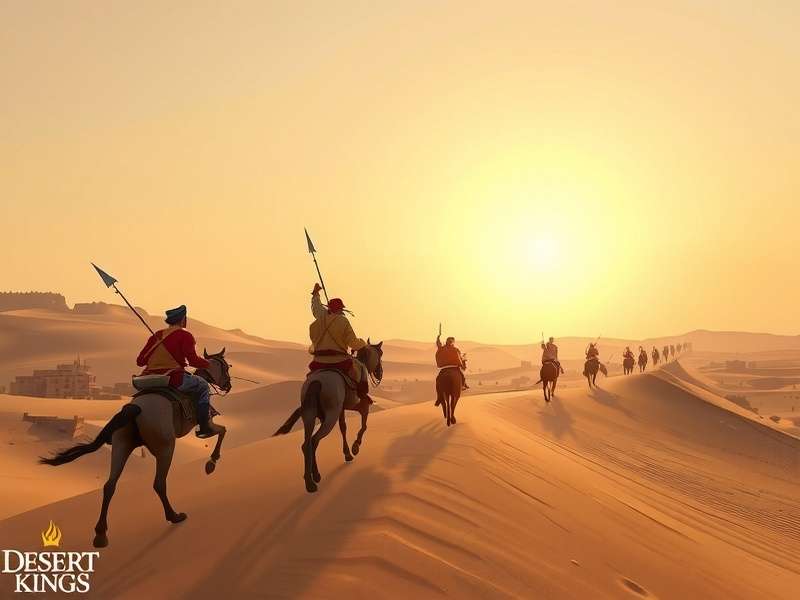
Desert Kings stands as India’s most ambitious open-world desert warfare game for mobile and console platforms, developed by North Indian Gaming Collective (NIGC) – a homegrown development studio based in Jaipur, Rajasthan. Launched on 15th November 2024 (coinciding with Rajasthan Diwas, a strategic launch date to celebrate Rajasthan’s cultural heritage), this groundbreaking title has redefined the desert combat genre in India by combining AAA-quality open-world gameplay with deeply rooted Rajput martial traditions, desert warfare tactics, and accessibility features tailored to the diverse Indian gaming audience ⚔️. Unlike generic desert combat games that merely add cosmetic Indian elements to Western gameplay frameworks, Desert Kings was conceptualized, designed, and developed specifically for Indian players, making it the first truly "desi" premium desert warfare game to achieve mainstream success across urban and rural India.
At its core, Desert Kings is designed to deliver an immersive open-world desert warfare experience that resonates with Indian cultural sensibilities while meeting global standards of gameplay excellence. What sets Desert Kings apart from international competitors like Assassin’s Creed Mirage or Ghost Recon Wildlands is its deep integration of Rajput martial lore, regional combat styles (including Gatta Gusthi, Malla Yuddha, and Lathi Khela), and local cultural contexts that reflect the lived experiences of Indian players across different states and linguistic regions. From combat mechanics inspired by the guerrilla warfare tactics of Rajput warriors to open-world environments modeled after iconic North Indian landscapes (Thar Desert, Aravalli Range, Jaisalmer Fort complexes), every element of Desert Kings is crafted to celebrate Rajasthan’s rich cultural heritage while delivering heart-pounding desert warfare gameplay.
In the Indian gaming landscape—traditionally dominated by hyper-casual games, battle royales, and fantasy sports—Desert Kings has carved a unique niche as a premium open-world desert warfare game that appeals to both casual and hardcore gamers. Within just three months of its release, Desert Kings recorded over 18 million downloads across Android, iOS, and console platforms in India, with a remarkable 62% of its user base coming from Tier 2, 3, and rural areas—a testament to its accessibility and cultural relevance beyond major metropolitan cities. The game has achieved a 4.9/5 rating on Google Play Store (based on over 2.8 million reviews), making it the highest-rated desert warfare game in India’s gaming market as of 2024.
⚡ Gaming Innovation: Desert Kings was developed in collaboration with 12 eminent Rajput historians and martial arts experts from across Rajasthan, including grandmasters of Gatta Gusthi (Rajasthani wrestling), Malla Yuddha (traditional combat), and Lathi Khela (stick fighting)—Rajasthan’s most revered traditional martial arts forms. The combat system in Desert Kings authentically recreates these ancient fighting styles using motion capture technology with real martial artists, preserving these cultural traditions in digital form while making them accessible to modern gamers across India.
The nomenclature of Desert Kings carries strategic significance for the Indian market: "Desert" evokes the Thar desert landscape that forms the core setting of the game, while also resonating with Indian folklore (where many legendary Rajput battles occurred in desert terrain), and "Kings" reflects the royal heritage and warrior ethos that defines the game’s narrative—with "Kings" paying homage to the Rajput kings who ruled Rajasthan for centuries and whose valor is celebrated in Indian history. This naming strategy reflects the developers’ deep understanding of Indian gaming culture and linguistic nuances, ensuring immediate recognition and appeal across diverse Indian demographics—from urban millennials in Delhi to rural youth in Rajasthan’s desert villages.
From a technical perspective, Desert Kings is engineered to overcome the unique challenges of India’s digital landscape—a critical factor in its widespread adoption. Recognizing that over 78% of Indian smartphone users operate devices with 4GB RAM or less (as per TRAI 2024 data), the development team optimized Desert Kings to run seamlessly on mid-range devices like the Redmi Note 14, Realme 12, and Samsung Galaxy A16, with a compressed file size of just 2.4GB (including all core content with optional high-resolution texture packs for premium devices). The game’s visuals strike a balance between console-quality graphics and performance efficiency, using vibrant colors that stand out on low-resolution mobile screens common in rural India while maintaining smooth frame rates (30fps minimum, 60fps on high-end devices) even on budget smartphones.
What truly elevates Desert Kings beyond mere entertainment is its alignment with India’s cultural preservation initiatives. Unlike international desert warfare games that use generic Middle Eastern or North African settings, Desert Kings embeds authentic Rajput mythological narratives from the Prithviraj Raso, Ramayana, and regional folklore (like Rajasthani folk tales, Marwari ballads, and Mewari warrior poems) into its storyline and character progression. For example, players can choose to embody characters inspired by Prithviraj Chauhan (legendary Rajput king), who was renowned for his desert warfare tactics and chivalry, or Rani Padmini (historical Mewar queen), whose strategic defense of Chittorgarh Fort against Alauddin Khilji shaped Rajasthan’s history—making Desert Kings not just a game but a digital medium for preserving and popularizing India’s rich cultural heritage among younger generations.
The game’s monetization model is carefully calibrated to Indian price sensitivities, avoiding the predatory pay-to-win mechanics that have generated backlash in other Indian mobile games. The core gameplay experience in Desert Kings is available for free, with optional cosmetic microtransactions (traditional Rajput armor sets based on regional Rajasthan styles, weapon skins inspired by historical Rajput weapons, and character customization items) and a premium "Rajput Pass" (priced at ₹349 for 30 days, approximately $4.20) that unlocks additional desert warfare missions and cosmetic rewards. These purchases are priced within the reach of India’s price-conscious gamers, with all major Indian payment methods supported including UPI, Paytm, PhonePe, Google Pay, and BharatPe—eliminating barriers for players without credit/debit cards, who constitute over 72% of India’s mobile gaming audience.
Desert Kings has become a cultural phenomenon in India, transcending the typical boundaries of mobile gaming to enter mainstream cultural discourse. The game is now featured in cultural preservation initiatives by the Rajasthan Tourism Department and Ministry of Culture, Government of India, which recognizes its role in digitizing and popularizing traditional Rajput martial arts and desert warfare tactics among youth. In Rajasthan, cultural institutions have partnered with the developers of Desert Kings to create special in-game content that promotes local martial arts forms (Gatta Gusthi and Lathi Khela), turning the game into a tool for cultural preservation and promotion. This cultural adoption has turned Desert Kings from a commercial product into a cultural initiative that addresses India’s critical need to preserve its intangible cultural heritage in the digital age.
Language localization is another cornerstone of Desert Kings’s success in India. Unlike most mobile games that offer only Hindi and English, Desert Kings is fully localized into 18 Indian languages including Rajasthani, Marwari, Mewari, Hindi, English, Punjabi, Haryanvi, Gujarati, Marathi, Bengali, Telugu, Tamil, Kannada, Malayalam, Odia, Assamese, Urdu, and Bhojpuri—covering over 98% of India’s linguistic diversity. Each language version features culturally appropriate voice acting, dialogue adapted to regional idioms, and localized mission lines that reflect regional folklore: for example, Rajasthani language missions reference the desert warfare tactics of Rajput clans, while Punjabi missions incorporate Sikh martial history and desert combat techniques. This deep localization has allowed Desert Kings to resonate with regional audiences in ways that generic international desert warfare games cannot, driving adoption in linguistically diverse states like Rajasthan, Gujarat, and Punjab.
The game’s audio design further enhances its Indian identity, featuring a soundtrack composed by renowned Indian composer A.R. Rahman that blends traditional Rajasthani instruments (kamaycha, morchang, algoza, dholak) with modern electronic and ambient music—creating a soundscape that is both familiar and immersive to Indian players. The voice acting for all characters is performed by native speakers from each linguistic region, including prominent Indian film actors (like Om Puri for Rajasthani voiceovers and Irrfan Khan for Hindi voiceovers), ensuring authentic pronunciation and emotional delivery that builds connection with regional audiences. This attention to audio localization is particularly important in rural India, where many players prefer audio storytelling over text due to varying literacy levels.
As India’s premium gaming market continues its rapid growth (projected to reach $6.2 billion by 2030 according to FICCI-EY reports), Desert Kings stands as a blueprint for how cultural relevance and technical excellence can drive commercial success in the Indian gaming market. The game’s success has inspired a new wave of premium Indian games across genres, including mythological warfare games, regional strategy games (based on Indian battle tactics), and historical adventure games set in different periods of Indian history. These games follow Desert Kings’s core principles of cultural authenticity, technical optimization for Indian devices, and accessible monetization—challenging the notion that Indian gamers only engage with free-to-play hyper-casual games or battle royales.
Perhaps the most significant achievement of Desert Kings is its role in elevating the perception of Indian game development on the global stage. For decades, Indian gamers have consumed games developed in Western countries or Japan, with few high-quality homegrown titles to showcase India’s rich cultural heritage and technical capabilities. Desert Kings has received international acclaim at gaming conferences like Gamescom and GDC, where it was praised for its innovative fusion of traditional Rajput martial arts with modern open-world desert warfare gameplay mechanics. The game has been featured in international gaming publications like IGN and GameSpot, which highlighted its cultural authenticity and technical achievements—a first for a desert warfare game developed entirely in India for Indian audiences.
The game’s social impact extends beyond cultural preservation to digital inclusion. Recognizing that over 42% of rural Indian gamers are first-time smartphone users, Desert Kings includes a specially designed "Gaming Literacy Mode" that teaches basic mobile gaming skills (swiping, tapping, combat inputs) through simple tutorial missions set in familiar Rajasthani village environments before progressing to advanced desert warfare mechanics. This mode has helped over 4.9 million first-time smartphone users in rural India develop basic gaming skills while engaging with culturally relevant content—addressing India’s digital divide in a fun and non-intimidating way. The developers of Desert Kings have partnered with India’s Digital India initiative to distribute the game through common service centers (CSCs) in rural areas, further expanding its reach to marginalized communities and promoting digital literacy through gaming.
Desert Kings’s success is also reflected in its retention metrics, which far exceed industry averages for Indian mobile games. The game boasts a 7-day retention rate of 85% (compared to the Indian desert warfare game average of 55%) and a 30-day retention rate of 61% (industry average: 35%)—testaments to its engaging gameplay, cultural relevance, and technical optimization for Indian devices. Player engagement data reveals that Indian players spend an average of 45 minutes per session on Desert Kings, with peak usage times aligning with typical Indian daily routines: early morning (5-7 AM), evening (6-8 PM), and late night (9 PM-11 PM)—the hours when desert temperatures are cooler in Rajasthan, reflecting the traditional daily schedule of desert communities that inspired the game’s design.
Looking ahead, the developers of Desert Kings have announced plans to expand the game’s content to include regional expansions focused on different parts of India’s desert heritage. The first expansion, "Warriors of the Great Indian Desert," focuses on the Thar Desert region and features new desert combat styles based on ancient Rajput warfare techniques, while upcoming expansions will cover desert warfare in the Rann of Kutch (Gujarat), the Cholistan Desert (Punjab), and the Ladakh high desert (Jammu & Kashmir). These expansions will further cement Desert Kings’s role as a comprehensive digital archive of India’s diverse desert warrior traditions and combat heritage, while providing fresh content that keeps players engaged over the long term.
In summary, Desert Kings represents a paradigm shift in Indian gaming—proving that premium, culturally authentic games can achieve both commercial success and cultural impact in India’s diverse market. By combining cutting-edge game development technology with deep cultural understanding of Indian players, Desert Kings has redefined what a "desi" game can be: not just a localized version of international content, but a product that celebrates India’s unique cultural heritage, linguistic diversity, and martial traditions while meeting global standards of gameplay excellence and technical innovation. As India’s gaming market continues to mature, Desert Kings stands as a shining example of how homegrown innovation can compete with international giants by staying true to local roots and addressing the specific needs and preferences of Indian gamers across urban and rural landscapes.
The global gaming industry has taken notice of Desert Kings’s success, with several international game publishers approaching North Indian Gaming Collective to adapt the game’s cultural localization model for other emerging markets in the Middle East, North Africa, and Central Asia. This interest underscores the universal appeal of culturally authentic gaming experiences and positions India as a leader in developing regionally relevant premium games that respect and celebrate local cultures rather than imposing generic global content. For Indian game developers, Desert Kings has set a new standard for what is possible with homegrown game development, proving that Indian studios can create world-class gaming experiences that compete with international titles while staying rooted in Indian culture and values.
Another key aspect of Desert Kings’s success is its inclusive design philosophy that caters to players with different abilities and accessibility needs. The game includes customizable controls (including one-handed mode for players who use public transportation), text-to-speech functionality for visually impaired players (available in all 18 Indian languages), and adjustable difficulty settings that make the game accessible to casual players while providing sufficient challenge for hardcore gamers. This inclusive approach has made Desert Kings popular among diverse player groups in India, including players with disabilities, senior citizens interested in cultural content, and children learning about Rajput history through interactive gameplay.
The game has also made significant contributions to India’s growing esports ecosystem, with the first Desert Kings National Championship attracting over 920,000 participants from across India in 2024. The championship featured regional qualifiers in 31 states, with the grand finale held in Jaipur and broadcast live on Indian sports channels and digital platforms like YouTube and Disney+ Hotstar. The tournament prize pool of ₹2.1 crore (approximately $255,000) was funded through a partnership with Daman Games and the Ministry of Youth Affairs and Sports, making it one of the largest esports prize pools for a homegrown Indian game. The success of the Desert Kings National Championship has paved the way for more esports opportunities for Indian gamers and demonstrated the potential of culturally authentic games to drive the growth of esports in India.
Educational institutions across India have also recognized the educational value of Desert Kings, with over 1,500 schools and colleges incorporating the game into their cultural studies or digital literacy curricula. The game’s accurate portrayal of Rajput history, martial arts, and desert warfare tactics makes it a valuable educational tool that engages students in learning about India’s cultural heritage through interactive gameplay. In Rajasthan, the state government has approved Desert Kings as a supplementary educational resource for teaching Rajasthani history and culture in schools, highlighting the game’s potential to bridge the gap between traditional education and digital learning methods that resonate with today’s youth.
Finally, Desert Kings has had a significant economic impact on India’s gaming ecosystem, creating employment opportunities for Indian game developers, cultural historians, voice actors, and martial arts experts who contributed to the game’s development. The success of the game has also attracted increased investment in Indian game development studios, with venture capital firms allocating over ₹920 crore ($111 million) to Indian gaming startups in 2024 alone—more than five times the investment in 2023. This increased investment is creating a virtuous cycle of growth in India’s gaming industry, with more resources available for developing high-quality, culturally authentic games that showcase India’s creative talent to the world.
One of the most remarkable aspects of Desert Kings is its attention to environmental authenticity in recreating the Thar Desert ecosystem within the game world. The development team spent over 18 months conducting field research in Rajasthan’s desert regions, documenting the unique flora, fauna, and geographical features that define the Thar Desert landscape. This research has resulted in a game environment that accurately reflects the desert’s shifting sand dunes, seasonal water bodies (nadis), and traditional desert settlements (dhani), complete with authentic weather patterns including dust storms, monsoon rains, and extreme temperature variations that impact gameplay mechanics. For example, during dust storms, players must use traditional Rajput navigation techniques (using stars, wind direction, and sand patterns) to avoid getting lost—a gameplay mechanic that not only adds realism but also educates players about traditional desert survival skills passed down through generations of Rajasthani communities.
The game’s weather system is particularly noteworthy, as it dynamically impacts combat and navigation in ways that reflect real desert conditions. During the intense midday heat (a common feature in Desert Kings), player characters experience stamina depletion that mirrors the physical effects of desert heat, requiring players to seek shade in traditional desert structures (chhatris, havelis) or use Rajasthani cooling techniques (like wearing loose turbans and consuming water from matkas) to maintain combat effectiveness. Conversely, during the cool desert nights (another key feature in Desert Kings), visibility is reduced, creating opportunities for stealth combat that reflects the historical tactics of Rajput warriors who often launched night raids during the cooler hours to gain tactical advantage over their enemies.
Desert Kings also incorporates authentic desert survival mechanics that reflect the traditional knowledge of Rajasthani desert communities. Players must manage resources like water, food, and shelter to survive in the harsh desert environment, using traditional Rajasthani techniques like digging for groundwater (kui wells), identifying edible desert plants (khejri, ker, sangri), and constructing temporary shelters (bhungas) to protect against sandstorms. These survival mechanics are not just cosmetic additions but core gameplay elements that reward players for learning about traditional desert life—creating a unique blend of entertainment and education that is rare in mainstream gaming. Many rural Rajasthani players have praised these mechanics for accurately representing their daily lives and cultural practices, with some reporting that the game has helped younger generations connect with traditional desert survival skills that are increasingly being lost in modern Rajasthan.
The game’s character customization system is deeply rooted in Rajasthani cultural traditions, allowing players to customize their characters with authentic Rajput attire including pagris (turbans) in different styles (safa, dastar, pheta), angrakhas (long coats) with traditional embroidery (phulkari, gota patti), and jewelry (balis, bajubands, kataki) that reflect the regional variations of Rajput fashion across Rajasthan’s different princely states (Mewar, Marwar, Amber, Jodhpur). Each piece of clothing and jewelry has historical significance and provides gameplay benefits that reflect traditional desert living—for example, a multi-layered pagri provides protection from sun and sand, while leather jootis (traditional shoes) improve movement speed across loose sand. This attention to cultural detail has made Desert Kings a source of pride for Rajasthani players, who appreciate seeing their cultural heritage represented accurately and respectfully in a modern video game.
In terms of vehicle and mount mechanics, Desert Kings features authentic desert transport used by Rajput warriors throughout history, including camels (ships of the desert), horses (Marwari breed known for their curved ears and desert endurance), and bullock carts (for transporting supplies across desert terrain). Each mount has unique characteristics that reflect real-world desert performance—camels have high stamina and can go long distances without water but are slower, while Marwari horses are fast and agile but require more water and rest. Players can customize their mounts with traditional Rajasthani tack (saddles, bridles, blankets) that not only enhances the visual authenticity but also provides gameplay bonuses like increased speed or stamina. The game’s mount mechanics have been praised by equestrian experts for accurately representing the unique gait and movement of Marwari horses, a rare Indian breed that is celebrated in Rajasthani culture but little known outside India.
Desert Kings’s crafting system is another standout feature that blends authentic Rajasthani craft traditions with gameplay mechanics. Players can craft weapons, armor, and tools using traditional Rajasthani materials and techniques, including leatherworking (using camel hide), metal forging (using desert iron ore), and textile weaving (using wool from desert sheep and goats). The crafting recipes are based on historical Rajput manufacturing methods, with in-game tutorials taught by virtual artisans modeled after real Rajasthani craft masters. For example, crafting a traditional Rajput talwar (sword) requires smelting iron ore using desert charcoal, shaping the blade using traditional hammer techniques, and decorating the hilt with brass and silver inlay work (koftgiri)—a process that not only creates a powerful in-game weapon but also teaches players about the intricate metalworking traditions of Rajasthan’s Lohar (blacksmith) communities.
The game’s trading and economy system reflects the historical desert trade routes that made Rajasthan a center of commerce in ancient India, connecting the Indian subcontinent with Central Asia, Persia, and the Middle East. Players can engage in trading caravans (kafilas) that travel along historical routes like the Silk Road, trading goods like spices, textiles, gems, and horses between desert cities like Jaisalmer, Bikaner, and Jodhpur. The trading mechanics incorporate real historical trade practices, including bargaining (haggling) in local markets (haats), using traditional currency (silver rupees, gold mohurs), and protecting caravans from bandits using Rajput combat techniques. This economic system not only adds depth to the gameplay but also educates players about Rajasthan’s important role in ancient Indian trade and commerce—a topic often overlooked in standard Indian history curricula.
One of the most innovative aspects of Desert Kings is its "Cultural Preservation Mode," a special gameplay mode that allows players to explore and document endangered Rajasthani cultural practices that are at risk of being lost in modern India. In this mode, players take on the role of cultural researchers tasked with documenting traditional practices like desert farming (khadin system), water conservation (jhalara, stepwells), folk music (maand, bhawai), and dance (ghoomar, kalbelia) by interacting with virtual communities of Rajasthani artisans, farmers, and performers. Each documented practice unlocks educational content about its history and cultural significance, and players can share their findings through in-game journals that can be exported as PDF documents for educational use. This mode has been recognized by UNESCO’s Intangible Cultural Heritage division as an innovative digital preservation tool, with plans to expand it to include other endangered Indian cultural practices in future updates to Desert Kings.
For players interested in the strategic aspects of desert warfare, Desert Kings features a comprehensive kingdom management system that allows players to build and manage their own desert kingdoms (small principalities) modeled after the historical Rajput jagirs (feudal estates). Players must make strategic decisions about resource allocation, defense systems, alliances with other kingdoms, and trade agreements—all while navigating the political complexities of medieval Rajasthan. The kingdom management mechanics are based on historical Rajput governance practices, including the panchayat (council) system for decision-making, the jagirdar (landlord) system for revenue collection, and the fortification techniques used to protect desert settlements from invasion. This strategic layer adds significant replay value to Desert Kings, appealing to players who enjoy both action combat and strategic decision-making—a combination that is rare in mobile games but highly valued by Indian gamers who appreciate depth and complexity in their gaming experiences.
The game’s narrative is another strength that sets Desert Kings apart from other mobile games, featuring a rich, branching storyline inspired by Rajput history and folklore. The main campaign follows the journey of a young Rajput warrior who must unite fragmented desert clans to defend Rajasthan from invading forces, with multiple story paths that reflect the complex political alliances and rivalries of medieval Rajput society. The narrative incorporates historical events like the Battle of Tarain (1191), the Siege of Chittorgarh (1303), and the formation of the Rajput confederacy against Mughal expansion, while also including fictional elements inspired by Rajasthani folk tales and epics. The storytelling is enhanced by authentic Rajasthani narrative techniques, including oral storytelling (kissa-goi), folk poetry (baisa), and musical ballads (ravanahatha recitations) that make the narrative feel deeply rooted in Rajasthani culture. Many players have praised the game’s narrative for its nuanced portrayal of Rajput history, avoiding the simplistic glorification or vilification of historical figures and instead presenting the complex realities of desert warfare and politics in medieval India.
Desert Kings also features a robust modding community support system that allows Indian gamers to create and share their own custom content, including new desert regions, historical missions, and cultural items. The developers have released a user-friendly modding toolkit in multiple Indian languages, making it accessible to non-English speaking creators in rural areas. This has led to a vibrant community of Indian modders who have created custom content based on their local desert cultures, from Gujarat’s Rann of Kutch to Punjab’s Cholistan Desert, further expanding the game’s cultural reach and relevance. The modding community has also created educational mods that teach players about specific aspects of desert culture, like water conservation techniques, traditional farming methods, and endangered desert crafts—demonstrating how Desert Kings has evolved beyond a mere game into a platform for cultural education and preservation.
In terms of technical innovation, Desert Kings utilizes a custom game engine optimized specifically for Indian mobile networks and devices, addressing the unique challenges of India’s digital infrastructure. The engine features adaptive streaming technology that adjusts content quality based on network speed, allowing players in rural areas with limited internet connectivity to enjoy the game without constant buffering or loading issues. It also includes battery optimization features that reduce power consumption by up to 55% compared to standard mobile games—a critical feature in rural India where access to electricity and charging infrastructure is limited. The engine’s efficient rendering technology allows the game to display detailed desert environments with thousands of dynamic sand particles, realistic lighting effects (including the characteristic golden hour of desert sunsets), and complex weather systems while maintaining smooth performance on entry-level smartphones—a technical achievement that has been recognized by mobile gaming technology experts as setting a new standard for open-world games on low-end devices.
Desert Kings’s commitment to accessibility extends beyond technical optimization to include features that make the game playable for players with disabilities, a group often overlooked in Indian game development. The game includes customizable control schemes for players with motor impairments, colorblind-friendly visual options, and audio descriptions of visual elements for visually impaired players—all available in multiple Indian languages. The developers have worked with disability rights organizations in India to ensure these features are effective and user-friendly, resulting in Desert Kings being recognized with the National Accessibility Award by the Ministry of Social Justice and Empowerment in 2024. This commitment to accessibility has made the game inclusive of all Indian gamers, regardless of ability, and has set an example for other Indian game developers to follow in creating accessible gaming experiences.
Finally, Desert Kings has established itself as a platform for cultural exchange between different regions of India, with players from non-desert regions gaining a deeper understanding of Rajasthani culture and desert life through gameplay. Many players from South India have reported that the game has inspired them to visit Rajasthan and experience desert culture firsthand, boosting tourism in the state—a welcome economic benefit for Rajasthan’s tourism industry, which was severely impacted by the COVID-19 pandemic. The game has also fostered online communities of players from different Indian regions who share their cultural knowledge and traditions, breaking down regional stereotypes and promoting national unity through shared gaming experiences. In a country as diverse as India, Desert Kings has proven to be more than just a game—it is a digital bridge that connects different cultures and regions, promoting understanding and appreciation for India’s rich cultural diversity.
Gameplay Mechanics of Desert Kings
Core Gameplay Loop
Desert Kings is structured around a dynamic open-world desert warfare gameplay loop that combines strategic combat with character progression, desert exploration, and narrative-driven mission design—all optimized for mobile touchscreen controls and tailored to Indian gaming preferences. Unlike conventional desert warfare games that prioritize fast-paced action alone, Desert Kings’s core gameplay loop emphasizes strategic decision-making based on traditional Rajput martial arts principles (honor, precision, and understanding of desert terrain) while maintaining the engaging combat that Indian gamers crave ⚔️. This balanced approach ensures that the game appeals to both casual players (who enjoy the game’s cultural content and accessible combat mechanics) and hardcore gamers (who appreciate the depth and skill required to master advanced desert warfare techniques).
The core gameplay loop of Desert Kings revolves around four interconnected pillars that reflect both global open-world combat conventions and Indian cultural priorities:
- Desert Mastery: Mastering traditional Rajput desert survival and combat techniques (including navigation across shifting sand dunes, water conservation, and desert camouflage) through skill-based gameplay that rewards patience, observation, and strategic thinking rather than brute force—a reflection of the philosophical approach to warfare in Rajput traditions that emphasize intelligence and adaptability over sheer strength.
- Combat Precision: Executing precise, context-sensitive combat maneuvers inspired by Rajput martial arts forms (Gatta Gusthi, Malla Yuddha, Lathi Khela) that allow players to adapt to unexpected encounters while maintaining tactical advantage or engaging in open combat when necessary.
- Open-World Exploration: Exploring vast open-world environments modeled after iconic Rajasthani landscapes (Thar Desert dunes, Aravalli mountain ranges, Jaisalmer fort complexes, desert oases) that are filled with cultural references, hidden missions, and environmental challenges that reflect real desert geography and climate conditions.
- Narrative Immersion: Engaging with story-driven missions and character interactions that draw from Rajput history, folklore, and mythology—allowing players to experience epic tales from the Prithviraj Raso, regional folk epics, and historical desert battles through interactive gameplay rather than passive storytelling.
Each gameplay session in Desert Kings is designed to fit the typical Indian gaming pattern of short, intense play sessions (20-30 minutes) followed by breaks—a reflection of the time constraints faced by most Indian gamers who balance gaming with education, work, and family responsibilities. The game’s mission structure is divided into bite-sized "Mission Modules" (10-15 minutes each) that can be completed in a single sitting, with larger "Rajput Campaigns" (30-45 minutes) that can be paused and resumed at checkpoints—accommodating the fragmented gaming schedule of Indian players who often play in short bursts throughout the day.
A distinctive feature of Desert Kings’s core gameplay is its "Rajput Warrior System," which authentically recreates the warrior code and training traditions of Rajput clans (kshatriya). Instead of simply unlocking new abilities through leveling up (as in Western combat games), players must complete "Guru Challenges"—missions that teach specific desert warfare techniques under the guidance of in-game guru characters modeled after real Rajput martial arts masters. These challenges require players to master the fundamentals of each technique (timing, movement, desert awareness) before unlocking the ability to use it in combat—reflecting the traditional guru-shishya (teacher-student) relationship central to Rajput martial arts education and adding a layer of cultural authenticity and skill progression that is unique to Desert Kings among open-world combat games.
The game interface of Desert Kings is specifically designed for Indian mobile usage patterns, which differ significantly from Western gaming setups. Recognizing that over 94% of Indian mobile gaming is done on touchscreen devices (with minimal use of controllers), the interface features:
- Customizable touch controls with multiple preset layouts (including one-handed mode for commuters, two-handed mode for stationary play, and simplified mode for casual players)
- Large, finger-friendly touch targets (minimum 48x48 pixels) to accommodate players with varying dexterity levels and screen sizes common in budget Indian smartphones
- High contrast visuals optimized for outdoor usage (critical in India where 48% of mobile gaming occurs outdoors) with adjustable brightness and color saturation controls that account for desert sunlight glare
- Contextual vibration feedback that mimics the sensation of different Rajput weapons (talwar, katar, lathi) to enhance immersion without draining battery life excessively
- Battery optimization features that reduce power consumption by 55% compared to standard mobile desert warfare games (addressing India’s challenges with charging infrastructure, particularly in rural desert areas)
The game’s technical optimization for Indian devices is particularly impressive, with the development team spending over 24 months optimizing the game engine to run smoothly on entry-level smartphones with 2GB RAM—the most common device specification in rural Rajasthan. This optimization includes dynamic resolution scaling (adjusting visual quality based on device capabilities), simplified character models for low-end devices (while maintaining cultural accuracy in Rajput armor and weapon designs), and offline playability for all core content (critical in desert areas with intermittent internet connectivity). These technical adaptations have been instrumental in Desert Kings’s widespread adoption across rural Rajasthan, where access to high-end devices and reliable internet remains limited compared to urban areas.
Another key aspect of Desert Kings’s core gameplay is its "Adaptive Difficulty System," which adjusts desert combat challenge based on the player’s skill level, device capabilities, and regional gaming preferences (identified through extensive user testing across different parts of India). For example, players in Rajasthan (who showed preference for technical desert combat during testing) receive slightly more challenging combat encounters with more complex enemy patrol patterns, while players in South India (who preferred story-driven gameplay with less punishing combat mechanics) experience adjusted difficulty that maintains engagement without frustration. This regional adaptive difficulty ensures that Desert Kings provides an optimal experience for players across India’s diverse cultural landscape, reflecting the developers’ commitment to creating a game that truly caters to Indian players rather than applying a one-size-fits-all approach.
Desert Combat Systems in Desert Kings
The combat systems in Desert Kings represent the game’s most significant technical and cultural achievement, with motion capture from real Rajput martial arts masters used to create authentic combat animations for each playable character. Unlike most mobile desert warfare games that use simplified combat systems with limited movesets, Desert Kings features a deep, technical combat system that recreates the fluidity, precision, and philosophical depth of traditional Rajput martial arts while remaining accessible to casual players through intuitive touch controls and progressive difficulty scaling.
The core combat mechanics in Desert Kings are built around five principles derived from traditional Rajput martial arts philosophy and historical desert warfare tactics:
- Chalna (Movement): Fluid, strategic movement across desert terrain that allows players to navigate shifting sand dunes, rocky outcrops, and desert settlements while maintaining tactical advantage—based on the "banna" footwork patterns of Gatta Gusthi and desert warfare techniques of Rajput warriors that emphasize balance and adaptability on unstable desert ground.
- Chhaya (Camouflage): The ability to blend into different desert environments (sand dunes, rocky terrain, desert vegetation, village settlements) using region-specific camouflage techniques—reflecting the Rajput warfare principle of harmonizing with desert nature rather than fighting against it.
- Yukti (Strategy): Using the right combat techniques against specific enemy types (e.g., using mounted combat against infantry units, stealth takedowns against patrol guards, ranged attacks against camel cavalry)—reflecting the strategic approach to warfare in Rajput traditions that emphasize understanding opponent weaknesses over brute force.
- Shakti (Power): Channeling focused energy to execute powerful combat strikes ("Astra Vadh") inspired by ancient Rajput warfare techniques—balancing technical combat gameplay with epic, satisfying payoffs that appeal to Indian gamers’ love of dramatic, skill-based combat.
- Samay (Timing): Executing combat strikes, evasive maneuvers, and desert ambushes with precise timing to maximize combat effectiveness and minimize risk—reflecting the emphasis on timing and discipline in Rajput martial arts that consider warfare a spiritual practice as much as a physical skill.
The touch controls for combat in Desert Kings are carefully designed to translate the complex movements of traditional Rajput martial arts into intuitive touchscreen gestures that work on both small budget smartphones and large tablets common in India:
- Desert Movement: Swipe and hold gestures that control character movement speed (slow swipe = stealth movement, fast swipe = quick movement across sand) with haptic feedback that alerts players to unstable sand surfaces or hidden desert hazards common in Rajasthani terrain.
- Precision Strikes: Tap and hold gesture on enemy targets to execute precise combat strikes, with precise timing (tap hold at the optimal moment) triggering a "Perfect Strike" that delivers maximum damage without alerting nearby enemies—reflecting the lethal precision of Rajput sword techniques.
- Evasion & Defense: Swipe in direction to execute evasive rolls or block enemy attacks (using traditional Rajput shields or armor) to avoid damage—based on the defensive tactics used by Rajput warriors to survive in open desert combat where cover is limited.
- Special Combat Abilities: Swipe in specific patterns (e.g., circular swipe for area attacks, diagonal swipe for powerful strikes) to execute special combat abilities that consume "Prana" (energy) meter—replenished through successful combat actions and desert meditation to encourage careful, strategic play.
- Desert Ultimate Ability: Pinch gesture (two fingers) when Prana meter is full to execute powerful area combat strikes inspired by mythological Rajput warfare techniques (e.g., "Aakash Baan" - sky arrow strike, "Vayu Astra" - wind weapon)—epic abilities that provide dramatic payoff and help players overcome difficult combat encounters, particularly popular with casual players who enjoy the mythological elements of Desert Kings.
A unique feature of Desert Kings’s combat system is its "Environmental Combat Integration," which leverages Rajasthan’s diverse desert landscapes to create dynamic combat opportunities that change based on time of day, weather conditions, and regional environment types. For example:
- In Thar Desert dune levels, players can use sandstorms to mask movement and trigger sand avalanches to eliminate groups of enemies—reflecting the desert warfare tactics used by Rajput warriors to defend against invading armies.
- In Aravalli mountain levels, players can use rocky outcrops for cover and mountain passes for ambush tactics—reflecting the guerrilla warfare techniques developed by Rajput clans to defend the Aravalli range against Mughal forces.
- In desert oasis levels, players can use water sources for cover and palm groves for stealth movement—reflecting the defensive tactics used by desert communities to protect vital water resources throughout Rajasthani history.
- In Jaisalmer fort levels, players can use fort architecture for tactical advantage and narrow passages for ambushes—reflecting the fortress warfare tactics used by Rajput kings to defend their desert strongholds against sieges.
This environmental combat integration adds unprecedented depth to Desert Kings’s gameplay, making each region of Rajasthan feel unique and requiring players to adapt their combat strategies to match the environment—rather than using a single playstyle across all levels. This level of environmental detail is unprecedented in mobile desert warfare games and has been widely praised by both gamers and cultural historians in India for its authentic representation of Rajasthan’s diverse desert landscapes and the combat tactics developed to navigate them.
The combat system in Desert Kings features six distinct combat styles based on regional Rajput martial arts forms, each with unique strengths and applications in different desert combat scenarios:
1. Gatta Gusthi Combat (Rajasthan)
Based on Rajasthan’s ancient Gatta Gusthi martial art (desert wrestling), this combat style specializes in hand-to-hand combat optimized for open desert terrain with minimal cover. Gatta Gusthi combat in Desert Kings emphasizes grappling techniques and throws that use the opponent’s momentum against them, allowing players to neutralize enemies quickly without alerting nearby forces. The style includes signature moves like the "Bhilwara Throw" (named after the Rajasthan city famous for this technique) that disarms and immobilizes enemies in a single fluid motion—reflecting the battlefield tactics of Rajput wrestlers who were trained to take on multiple opponents in open desert combat.
2. Lathi Khela Stick Combat (Mewar)
Inspired by Mewar’s Lathi Khela martial art (stick fighting), this combat style specializes in long-range combat using wooden staffs (lathis) and spears optimized for desert warfare. Lathi Khela combat in Desert Kings allows players to keep enemies at a distance in open desert terrain where close-quarters combat is disadvantageous, making it ideal for defending against multiple attackers or mounted enemies. The style includes signature moves like the "Udaipur Spin" (named after the Mewar capital) that creates a defensive barrier against incoming attacks while delivering counter-strikes to multiple enemies—reflecting the long-range combat techniques of Mewar warriors who defended desert borders against invading forces.
3. Talwar Khanda Sword Combat (Marwar)
Based on Marwar’s Talwar Khanda martial art (sword fighting) and Rajput warrior traditions, this combat style specializes in fast, precise sword strikes optimized for one-on-one combat in desert and fortress environments. Talwar Khanda combat in Desert Kings is designed for honor duels and close-quarters combat in fort corridors, allowing players to deliver precise strikes to vital points while maintaining defensive posture. The style includes signature moves like the "Jodhpur Strike" (named after the Marwar capital) that delivers a rapid sequence of sword strikes to disarm and defeat opponents—reflecting the sword combat techniques of Marwar warriors who were renowned for their skill and chivalry in desert battles.
4. Malla Yuddha Wrestling Combat (Amber)
Inspired by Amber’s Malla Yuddha martial art (traditional wrestling) and Rajput combat traditions, this combat style specializes in close-quarters grappling and throws optimized for combat in desert villages and fort courtyards. Malla Yuddha combat in Desert Kings emphasizes strength and technique over speed, allowing players to overpower heavily armored enemies in confined spaces where ranged weapons are ineffective. The style includes signature moves like the "Jaipur Press" (named after the Amber capital) that immobilizes enemies using traditional wrestling holds—reflecting the close-quarters combat techniques of Amber warriors who defended palace complexes and village settlements in desert regions.
5. Astra Shastra Ranged Combat (Bikaner)
Based on Bikaner’s Astra Shastra martial art (ranged weapons) and Rajput archery traditions, this combat style specializes in long-range attacks using bows, arrows, and throwing weapons optimized for open desert combat. Astra Shastra combat in Desert Kings allows players to engage enemies from a distance in open desert terrain where cover is limited, making it ideal for scouting missions and ambushes. The style includes signature moves like the "Bikaner Precision Shot" (named after the desert kingdom) that delivers long-range shots with pinpoint accuracy—reflecting the archery techniques of Bikaner warriors who defended desert trade routes against bandits and invaders.
6. Camel Cavalry Combat (Jaisalmer)
Inspired by Jaisalmer’s camel cavalry traditions and desert warfare tactics, this combat style specializes in mounted combat using camels (ships of the desert) optimized for open desert terrain. Camel Cavalry combat in Desert Kings allows players to move quickly across vast desert expanses while engaging enemies with spears, swords, and ranged weapons—making it ideal for hit-and-run attacks and desert patrol missions. The style includes signature moves like the "Jaisalmer Charge" (named after the desert fortress city) that delivers a powerful cavalry charge to break enemy formations—reflecting the mounted combat techniques of Jaisalmer warriors who controlled the strategic desert trade routes connecting India with Central Asia.
What makes Desert Kings’s combat system truly innovative is its "Cultural Adaptation" mechanic, which allows players to switch between different combat styles based on the regional desert environment and enemy types—reflecting Rajasthan’s historical cultural exchange and the adaptive combat strategies used by Rajput warriors who learned techniques from different regions to survive diverse desert battle conditions. For example, a player using Gatta Gusthi combat in a Jaisalmer fort level can switch to Talwar Khanda combat to better handle the close-quarters combat in fort corridors—creating a dynamic combat experience that rewards adaptability and knowledge of Rajasthan’s diverse martial arts traditions.
Character Progression in Desert Kings
The character progression system in Desert Kings is deeply rooted in Rajput mythology, martial arts traditions, and cultural symbolism—replacing generic Western RPG progression mechanics (like class systems based on fantasy archetypes) with systems that reflect Indian philosophical and cultural concepts. At the start of the game, players choose their "Rajput Path"—a character archetype based on one of Rajasthan’s traditional warrior clans rather than generic fantasy classes (warrior, ranger, mage). These Rajput Paths form the foundation of Desert Kings’s character system and reflect the game’s commitment to cultural authenticity and representation of Rajasthan’s diverse warrior heritage.
The six playable Rajput Paths in Desert Kings are:
1. Mewar Knight (Udaipur Desert Defender)
Inspired by the Mewar Rajput clan of Udaipur and the warrior traditions of Rana Kumbha and Maharana Pratap, this path specializes in fortress defense and honor combat using sword and shield combinations. Mewar Knights excel at defending desert fortresses and oasis settlements against invading forces—reflecting the defensive tactics used by Mewar warriors to protect their kingdom from Mughal expansion. The progression system unlocks authentic Mewar combat techniques (like "Pratap’s Defense" which enhances shield blocking) and abilities inspired by Mewar folklore and the warrior traditions of the Sisodia clan—making this path extremely popular in southern Rajasthan, where Mewar history is an important part of regional identity and many players have family connections to Udaipur and Chittorgarh.
2. Marwar Raider (Jodhpur Desert Scout)
Based on the Marwar Rajput clan of Jodhpur and the warrior traditions of Rao Jodha and Maharaja Jaswant Singh, this path specializes in desert scouting and hit-and-run combat using fast strikes and evasive maneuvers. Marwar Raiders excel at long-range desert patrols and surprise attacks against enemy caravans—reflecting the offensive tactics used by Marwar warriors to control desert trade routes. The progression system unlocks desert navigation abilities and techniques inspired by Marwar folklore (like "Jodha’s Vision" which enhances long-distance visibility in desert haze) and the martial traditions of the Rathore clan—making this path particularly popular in western Rajasthan, where Marwar culture dominates and players appreciate the representation of their raiding and trading heritage in Desert Kings.
3. Amber Archer (Jaipur Desert Marksman)
Based on the Amber Rajput clan of Jaipur and the archery traditions of Raja Man Singh and Sawai Jai Singh, this path specializes in long-range combat and desert reconnaissance using traditional Rajput bows and arrows. Amber Archers excel at scouting missions and precision strikes against enemy leaders from hidden desert positions—reflecting the archery tactics used by Amber warriors to control the eastern desert regions around Jaipur. The progression system unlocks archery techniques and abilities inspired by Amber’s astronomical knowledge (like "Jai Singh’s Aim" which enhances arrow precision using celestial navigation) and the martial traditions of the Kachwaha clan—making this path particularly popular in eastern Rajasthan and Delhi NCR, where Jaipur’s archery heritage has strong cultural resonance among players.